How to Fix Concrete Spalling and Damage in Atlanta
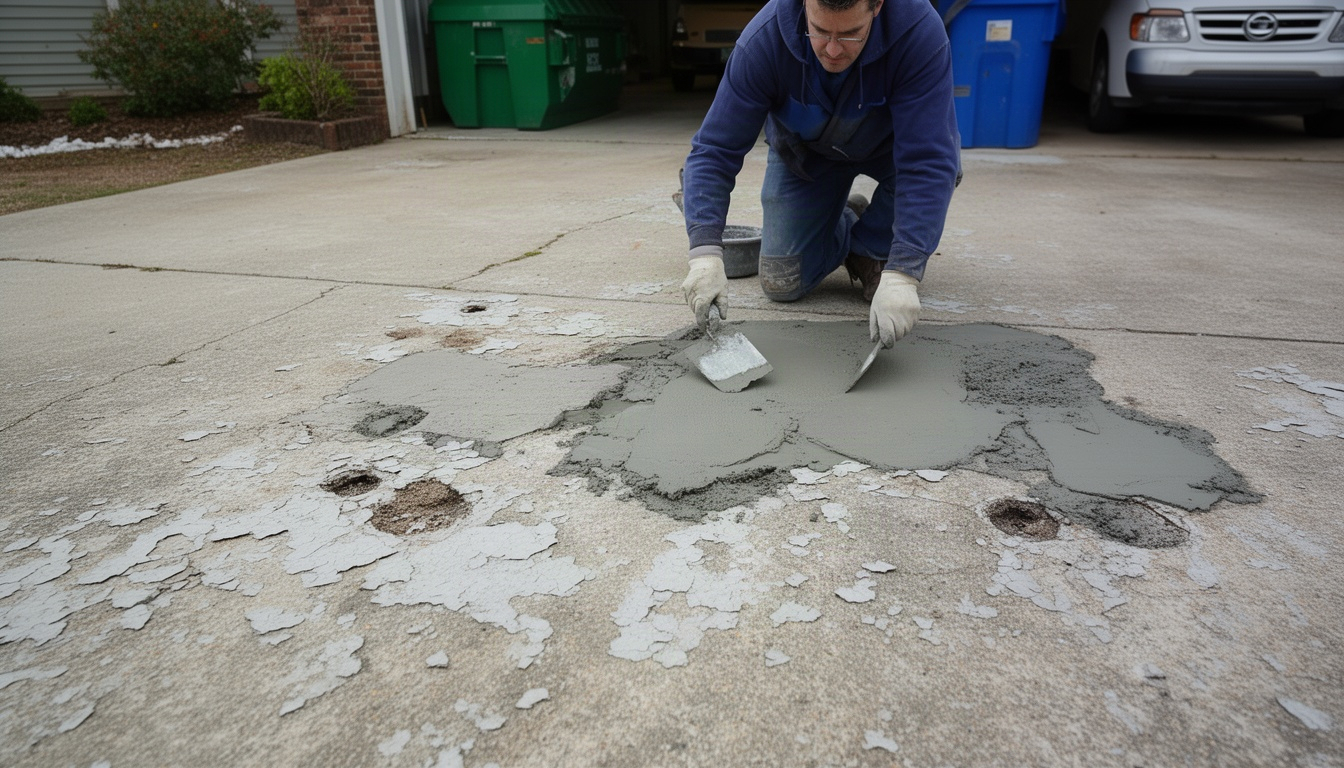
Concrete Driveway Installation in Atlanta, GA: Dekalb Concrete serves Atlanta and the surrounding area. Visit dekalbconcretellc.com for a free quote.
TL;DR: Concrete spalling - the flaking or chipping of concrete surfaces - is common in Atlanta due to freeze-thaw cycles, clay soil movement, and occasional deicing salt use. Minor surface spalling (under ¼ inch deep) can be repaired with DIY resurfacer kits for $200–$600 on a typical driveway; deeper damage or structural concerns require professional repair at $1,200–$3,200. The best time to repair in Atlanta is spring (April–May) or fall (September–October), when temperatures stay within the 50°F–90°F application window for concrete repair products.
In This Article
- What Is Concrete Spalling and Why Does It Happen in Atlanta?
- How Severe Is the Damage? Assessing Your Concrete Before Repair
- How Do You Fix Surface Spalling on Concrete? (DIY Method)
- When Should You Hire a Concrete Contractor in Atlanta Instead of DIY?
- How Can You Prevent Concrete Spalling From Happening Again in Atlanta?
- FAQ: Fixing Concrete Spalling and Damage in Atlanta
- Ready to Fix Your Concrete?
What Is Concrete Spalling and Why Does It Happen in Atlanta?
Concrete spalling is the breaking away of the concrete surface in flakes or fragments, exposing the inner aggregate and weakening the structure. Learn more about why concrete cracks in Georgia. It's distinct from cracking (linear fractures) and scaling (loss of the top mortar layer in sheets). Here in Atlanta, spalling is a real concern because our climate creates the perfect conditions for it.
Atlanta experiences 5–15 freeze-thaw cycles per year - fewer than northern markets, but enough to cause damage when combined with our expansive red clay soil. The Piedmont region's residual clay soils have high plasticity, causing differential settlement at slab edges and control joints. When water infiltrates concrete and freezes, it expands with tremendous force, breaking the surface. Add occasional deicing salt from rare ice events, and the problem accelerates.
Summer heat compounds the issue. Our average July high of 91°F creates expansion stress on concrete slabs, especially on dark-colored driveways that absorb more heat. Over time, this thermal cycling weakens the paste layer near the surface.
The result: shallow, flaking spalling on driveways, patios, garage floors, and sidewalks throughout DeKalb, Gwinnett, and surrounding metro Atlanta areas. Older concrete - especially pre-2000 installations with higher water-cement ratios - is more vulnerable because it's more porous.
Key Takeaway: Atlanta's combination of freeze-thaw cycling, clay soil movement, summer heat, and occasional salt exposure creates a unique spalling pattern that differs from northern climates. Understanding this local context helps you choose the right repair method.
How Severe Is the Damage? Assessing Your Concrete Before Repair
Before you decide whether to DIY or hire a professional, measure the depth and extent of damage. This determines which repair path makes sense.
Three-Tier Severity Scale:
Tier 1: Surface-Level Spalling (Under ¼ inch deep)
- Flaking or pitting visible, but you can't fit a coin edge into the damage
- Aggregate particles may be exposed, but no rebar visible
- Affects less than 25% of the surface
- Repair method: DIY concrete resurfacer
- Timeline: 1–2 days
- Cost: $200–$600 for a typical 400 sq ft driveway
Tier 2: Moderate Spalling (¼ inch to 1 inch deep)
- Visible delamination; a coin edge fits into the damage
- Possible rebar exposure in isolated spots
- Affects 25–50% of the surface
- Repair method: Professional patching or overlay
- Timeline: 2–5 days
- Cost: $1,200–$3,200 for a 400 sq ft driveway
Tier 3: Structural Damage (Over 1 inch deep or rebar exposed)
- Deep pitting or large chunks missing
- Rebar rust visible or concrete crumbling
- Affects more than 50% of the surface
- Repair method: Full-depth repair or replacement
- Timeline: 5–14 days
- Cost: $2,400–$4,800+ for a 400 sq ft driveway
How to Measure:
Use a ruler or coin. Place it perpendicular to the damaged area and measure the depth. If you're unsure, perform the "tap test" - tap the surface with a hammer. A hollow sound indicates subsurface delamination, which suggests Tier 2 or higher damage.
For Atlanta slab-on-grade foundations (common in our area), depth matters more than it does in northern climates. Our clay soil can shift beneath a slab, so even moderate spalling can indicate foundation movement. If you see spalling concentrated at control joints or slab edges, that's a red flag for differential settlement.
How Do You Fix Surface Spalling on Concrete? (DIY Method)
If your damage is Tier 1 (under ¼ inch), you can repair it yourself with concrete resurfacer, a bonding agent, and basic tools. (Weather.gov) (Climate.gov) Learn more about Concrete Patio Settling Problems in DeKalb County (2026). Learn more about properly preparing the concrete substrate. This method works well for driveways, patios, garage floors, and sidewalks in Atlanta.
Tools and Materials Needed:
- 4,000 PSI pressure washer or angle grinder with diamond cup wheel (~$80–$120 rental per day)
- Concrete bonding adhesive (~$15–$25 per gallon)
- Concrete resurfacer (~$28–$35 per 50-lb bag)
- Trowel, broom, bucket, safety glasses, dust mask
- Total material cost: $100–$300 for a 400 sq ft area
Step 1: Clean and Prepare the Damaged Surface
Start with a pressure wash at 4,000 PSI to remove dirt, algae, and loose debris. If you don't have a pressure washer, rent one from Home Depot or Sunbelt Rentals (Atlanta locations available). Let the surface dry completely - this typically takes 4–8 hours in Atlanta's humidity.
For stubborn stains or old sealant, use an angle grinder with a diamond cup wheel to achieve ICRI Concrete Surface Profile (CSP) 3–4. This roughens the surface for better bonding. Wear a dust mask; concrete dust is hazardous.
Sweep away all dust and debris. A clean surface is critical - this is where most DIY repairs fail.
Step 2: Remove Loose and Flaking Concrete
Use a cold chisel and hammer to chip away any loose or flaking concrete. Tap gently; you're not trying to remove sound concrete, just the unstable bits. If the damage is extensive, a pneumatic chisel (rental ~$40–$60/day) speeds this up.
Once you've removed loose material, vacuum or blow out the cavity. Dampen the surface with a spray bottle - it should be damp but not wet (saturated-surface-dry, or SSD). This is especially important in Atlanta's humid summers; excess moisture prevents bonding.
Step 3: Apply Bonding Agent and Resurfacer
This step is non-negotiable. Omitting a bonding agent is the leading cause of DIY repair failure.
Apply a concrete bonding adhesive (latex or epoxy) to the prepared surface using a brush or roller. Follow the product instructions - most require a thin, even coat. Quikrete Concrete Bonding Adhesive No. 9902 is widely available in Atlanta and works well.
While the bonding agent is still tacky (usually 15–30 minutes), mix your concrete resurfacer. Use a 5-gallon bucket and a drill with a paddle mixer. Mix to a peanut-butter consistency - thick enough to hold a trowel mark but spreadable.
Pour the resurfacer into the damaged area and trowel it smooth, slightly overfilling the repair. Feather the edges to blend with the surrounding concrete. Work quickly; resurfacer begins to set in 30–45 minutes.
Step 4: Cure and Protect the Repair
Concrete resurfacer is walkable in 6 hours and driveable in 24 hours under typical Atlanta conditions. However, full cure takes 28 days before you should apply a sealer.
Keep the repair damp for the first 24 hours by misting it with water every few hours. This prevents rapid drying, which causes cracking. Cover it with plastic sheeting if rain is forecast.
Atlanta Timing Tip: Avoid applying resurfacer when temperatures exceed 90°F or drop below 50°F. Atlanta's average July high is 91°F, so plan morning-only applications (before 9–10 AM) during summer. Spring (April–May) and fall (September–October) are ideal - temperatures stay within the 50°F–90°F window most of the day.
When Should You Hire a Concrete Contractor in Atlanta Instead of DIY?
DIY resurfacing works for minor, isolated damage. But several situations demand professional repair.
Hire a Pro If:
- Damage exceeds ¼ inch deep. Tier 2 and Tier 3 damage requires full-depth repair, epoxy injection, or overlay systems that need specialized equipment and expertise.
- Rebar is visible or rusted. Corroded reinforcement indicates structural compromise. A professional can assess whether repair or replacement is necessary.
- Spalling is concentrated at slab edges or control joints. This pattern suggests differential settlement from clay soil movement - a structural issue that resurfacer alone won't fix.
- More than 25% of the surface is affected. Large-area repairs require professional-grade materials and equipment.
- The concrete is on a foundation, pool deck, or commercial property. These applications have higher performance standards and liability concerns.
Cost Comparison:
DIY resurfacing materials run $0.50–$1.50 per square foot. Professional repair in Atlanta averages $3–$8 per square foot, depending on the method and extent of damage.
Example: 400 sq ft driveway
- DIY materials: ~$200–$600
- Professional repair: ~$1,200–$3,200
- Full replacement: ~$2,400–$4,800
The labor cost reflects surface preparation, bonding agent application, specialized resurfacer or overlay systems, and proper curing protocols. Professionals also carry liability insurance and can address underlying issues like poor drainage or slab heaving.
Questions to Ask Atlanta Concrete Contractors:
- Are you licensed and insured? (Georgia requires a valid contractor license for residential projects over $2,500.)
- What repair method do you recommend, and why?
- Will you address the underlying cause (e.g., drainage, slab settlement)?
- What warranty or guarantee do you offer?
- Can you provide references from recent Atlanta-area jobs?
Local providers like Dekalb Concrete offer free estimates and can assess whether your damage is DIY-appropriate or requires professional intervention. A quick phone call can save you from a failed repair attempt.
How Can You Prevent Concrete Spalling From Happening Again in Atlanta?
Once you've repaired spalling, prevention is key. Atlanta's climate demands proactive maintenance.
Seal Your Concrete Every 2–3 Years
Penetrating silane-siloxane sealers are superior to acrylic sealers in Atlanta's freeze-thaw climate. They reduce water absorption by 80–95% while allowing vapor transmission, preventing moisture entrapment that causes spalling. Acrylic sealers are cheaper but require more frequent reapplication and don't perform as well in our climate.
Cost: ~$30–$60 per gallon, covering 200–400 sq ft. A typical 400 sq ft driveway costs $40–$80 to seal.
Avoid Deicing Salts
Rock salt (sodium chloride) accelerates spalling by increasing freeze-thaw pressure and introducing chloride ions that corrode reinforcement. If you live in an area that occasionally ices over, use sand or calcium magnesium acetate (CMA) instead. CMA costs more (~$25–$40 per bag vs. ~$8 for rock salt) but preserves concrete.
Manage Drainage
Water infiltration is the root cause of spalling. Ensure water drains away from your driveway, patio, or foundation. Grade the surrounding soil away from the concrete, and keep gutters clean so water doesn't pool at slab edges.
Maintain Expansion Joints
Joints should be cleaned and resealed every 3–5 years with flexible polyurethane or silicone sealant. Neglected joints allow water infiltration that accelerates spalling at slab edges. Joint sealant costs ~$8–$15 per tube and covers about 30 linear feet.
Control Thermal Stress
In summer, light-colored concrete stays cooler and experiences less expansion stress. If you're replacing concrete, consider a lighter finish. Avoid parking heavy vehicles on the same spot repeatedly, as concentrated weight can accelerate spalling in weakened areas.
FAQ: Fixing Concrete Spalling and Damage in Atlanta
How much does concrete spalling repair cost in Atlanta?
Direct Answer: Professional concrete spalling repair in Atlanta costs $3–$8 per square foot, or $1,200–$3,200 for a typical 400 sq ft driveway. DIY resurfacing materials cost $0.50–$1.50 per square foot, or $200–$600 for the same area.
The cost depends on damage severity, repair method, and whether the contractor addresses underlying issues like poor drainage or slab settlement. A free estimate from a local contractor is the best way to get an accurate quote for your specific situation.
Can you resurface spalled concrete yourself or do you need a pro?
Direct Answer: You can DIY repair surface spalling under ¼ inch deep using concrete resurfacer and a bonding agent. Deeper damage (¼ inch to 1 inch) or structural issues require professional repair.
The key to successful DIY repair is surface preparation, bonding agent application, and proper curing. Most failures occur because homeowners skip the bonding agent or apply resurfacer in the wrong temperature range. If you're unsure about damage depth or the underlying cause, a professional assessment is worth the investment.
What is the difference between concrete spalling and concrete cracking?
Direct Answer: Spalling is the flaking or chipping of the concrete surface, exposing inner aggregate. Cracking is a linear fracture that may or may not penetrate the full depth. Scaling is loss of the top mortar layer in sheets.
Spalling typically results from freeze-thaw cycling, deicing salts, or water infiltration. Cracking can stem from settlement, thermal stress, or structural load. The repair method differs for each. If you have cracking in addition to spalling, a professional can determine whether they're related or separate issues.
How long does a concrete spalling repair last in Atlanta's climate?
Direct Answer: A properly executed DIY or professional repair typically lasts 5–10 years in Atlanta's climate. Sealing the repaired area every 2–3 years extends the lifespan significantly.
The longevity depends on the repair method, underlying cause, and maintenance. If the repair doesn't address the root cause (e.g., poor drainage or slab settlement), spalling may recur in the same area. Professional repairs that include drainage correction or full-depth patching tend to last longer.
What causes concrete to spall on Atlanta driveways and patios?
Direct Answer: Atlanta's freeze-thaw cycles (5–15 per year), expansive red clay soil, summer heat expansion, and occasional deicing salt use combine to cause spalling. Water infiltration into porous concrete freezes and expands, breaking the surface.
Older concrete (pre-2000) with high water-cement ratios is more vulnerable. Neglected expansion joints and poor drainage accelerate the problem. Sealing concrete every 2–3 years and managing drainage are the best preventive measures.
Is it worth repairing spalled concrete or should you replace it entirely?
Direct Answer: Repair is worth it if damage is limited to surface or moderate levels (under 1 inch deep, affecting less than 50% of the surface). Full replacement is more cost-effective if damage is extensive, rebar is corroded, or the slab is settling.
A professional can assess whether repair or replacement makes sense. In many cases, repair buys you 5–10 additional years at a fraction of replacement cost. However, if the underlying cause (e.g., severe foundation settlement) isn't addressed, spalling will recur.
When is the best time to repair concrete spalling in Atlanta?
Direct Answer: Spring (April–May) and fall (September–October) are ideal for concrete repair in Atlanta. Temperatures stay within the 50°F–90°F application window for most resurfacers, and humidity is moderate.
Avoid July–August (average high 91°F) and January–February (freeze risk). If you must repair in summer, apply resurfacer in early morning before temperatures exceed 90°F. Winter repairs risk freeze damage to freshly cured concrete.
Ready to Fix Your Concrete?
If your spalling is minor and you're comfortable with DIY work, the steps above will guide you through a successful repair. Stock up on materials in spring or fall when conditions are ideal, and take your time with surface preparation - it's the foundation of a lasting repair.
For damage deeper than ¼ inch, visible rebar, or spalling concentrated at slab edges, professional repair is the safer choice. A licensed Atlanta contractor can assess the underlying cause and recommend the best solution.
Dekalb Concrete serves Atlanta, DeKalb, Gwinnett, Marietta, Roswell, and surrounding areas with free estimates on concrete repair, resurfacing, and replacement. Whether you need a second opinion on DIY feasibility or a full professional repair, calling for a free quote takes the guesswork out of the decision.
Call Dekalb Concrete today for a free estimate on your concrete spalling repair.
Frequently Asked Questions
What Is Concrete Spalling and Why Does It Happen in Atlanta?
Concrete spalling is the breaking away of the concrete surface in flakes or fragments, exposing the inner aggregate and weakening the structure. Learn more about why concrete cracks in Georgia. It's distinct from cracking (linear fractures) and scaling (loss of the top mortar layer in sheets). Here in Atlanta, spalling is a real concern because our climate creates the perfect conditions for it.
When Should You Hire a Concrete Contractor in Atlanta Instead of DIY?
DIY resurfacing works for minor, isolated damage. But several situations demand professional repair.
How Can You Prevent Concrete Spalling From Happening Again in Atlanta?
Once you've repaired spalling, prevention is key. Atlanta's climate demands proactive maintenance.
How much does concrete spalling repair cost in Atlanta?
Professional concrete spalling repair in Atlanta costs $3–$8 per square foot, or $1,200–$3,200 for a typical 400 sq ft driveway. DIY resurfacing materials cost $0.50–$1.50 per square foot, or $200–$600 for the same area.
Can you resurface spalled concrete yourself or do you need a pro?
You can DIY repair surface spalling under ¼ inch deep using concrete resurfacer and a bonding agent. Deeper damage (¼ inch to 1 inch) or structural issues require professional repair.
What is the difference between concrete spalling and concrete cracking?
Spalling is the flaking or chipping of the concrete surface, exposing inner aggregate. Cracking is a linear fracture that may or may not penetrate the full depth. Scaling is loss of the top mortar layer in sheets.
How long does a concrete spalling repair last in Atlanta's climate?
A properly executed DIY or professional repair typically lasts 5–10 years in Atlanta's climate. Sealing the repaired area every 2–3 years extends the lifespan significantly.
What causes concrete to spall on Atlanta driveways and patios?
Atlanta's freeze-thaw cycles (5–15 per year), expansive red clay soil, summer heat expansion, and occasional deicing salt use combine to cause spalling. Water infiltration into porous concrete freezes and expands, breaking the surface.
Is it worth repairing spalled concrete or should you replace it entirely?
Repair is worth it if damage is limited to surface or moderate levels (under 1 inch deep, affecting less than 50% of the surface). Full replacement is more cost-effective if damage is extensive, rebar is corroded, or the slab is settling.
When is the best time to repair concrete spalling in Atlanta?
Spring (April–May) and fall (September–October) are ideal for concrete repair in Atlanta. Temperatures stay within the 50°F–90°F application window for most resurfacers, and humidity is moderate.